2025-2026 Season CIM Distinguished Lecturer - Gary Poxleitner
Topic: Mining value from waste through biotechnology
Location: Dynamic Earth, Sudbury
Time: April 16th, Thursday, 2026. Registration Starts 5:30pm. Presentation Starts 6:00pm

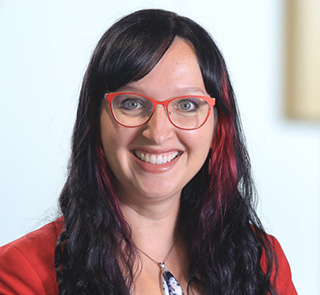
Distinguished Lecturer - Dr. Nadia Mykytczuk
BIO
Dr. Nadia Mykytczuk is the President and CEO of MIRARCO (Mining Innovation, Rehabilitation and Applied Research Corporation), and serves as Executive Director of the Goodman School of Mines at Laurentian University. She brings over two decades of experience in environmental microbiology with a focus on mining systems, microbial ecology, and the development and application of biomining and bioremediation technologies.
Her research program is centered on microbial approaches to mine waste valorization, critical mineral recovery, and site remediation. She has extensive expertise in bioleaching, cold-adapted microorganisms, and applied geomicrobiology, with a strong track record of translating fundamental research into scalable, pilot-ready technologies for the mining industry.
She currently holds the NOHFC Industrial Research Chair in Biomining and Bioremediation, leading a multidisciplinary team developing microbial solutions to legacy and emerging challenges in mine waste management. Since 2012, she has trained over 80 highly qualified personnel (HQP) across disciplines including biology, geology, biochemistry, and engineering, with an emphasis on applied, industry-relevant research training.
ABSTRACT
Mine waste and tailings represent both long-term environmental liabilities and untapped sources of critical minerals and materials. This lecture focuses on microbially-driven bioleaching as a transformative approach to recover value from mine waste while advancing zero-waste mining solutions. By leveraging targeted microbial metabolisms, valuable metals can be selectively mobilized from low-grade or legacy materials, reducing toxicity and supporting environmental remediation. The integration of genomics technologies has improved our ability to identify and control microbial catalysts, overcoming previous barriers to large-scale application. A critical focus of this growing field is on piloting and scaling these technologies under real-world conditions to accelerate commercialization and reduce technical and financial risk. Attendees will gain a better understanding of the use of cross-disciplinary approaches combining microbiology, geochemistry, and engineering and see a few use cases that illustrate a viable approach to zero-waste and circular mine waste management. Canada is very well positioned to create economic opportunities from waste while strengthening the domestic supply of critical minerals in alignment with clean energy transition goals.
Photography Disclaimer: CIM Sudbury Branch reserves the right to photograph its events, and from time to time we use these photos in our publications. By registering for any of our events, you understand and acknowledge that your photograph may be taken and used, at CIM Sudbury Branch discretion.